China Best Strong Base Anion Exchange Resin In the World: Market Outlook Across Regional Demand
XIAN, SHAANXI, CHINA, September 29, 2026 /EINPresswire.com/ -- Demand for strong base anion exchange resin often gets
Press Release Disclaimer: This is a press release distributed through the XPR Media network. It has not been independently verified by our newsroom.
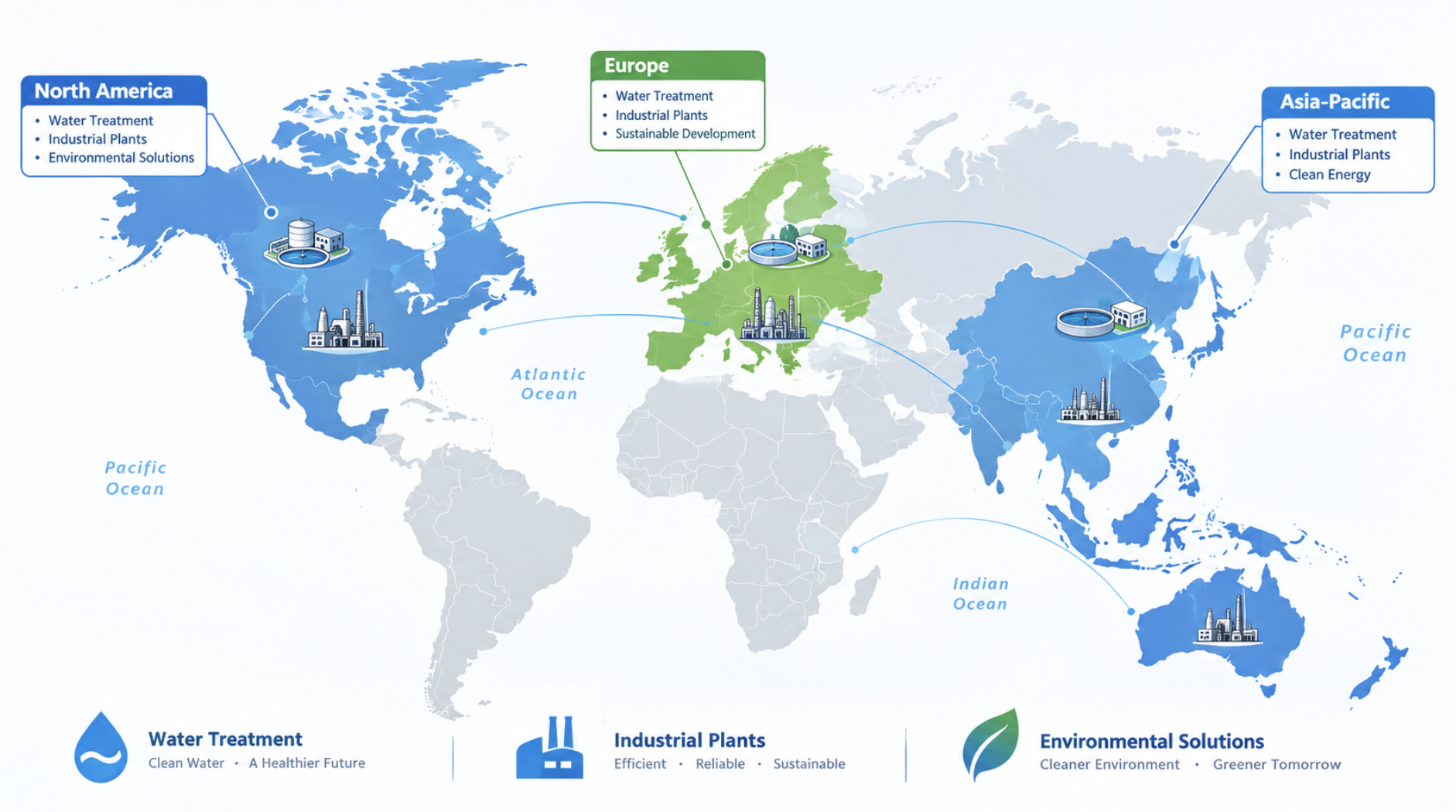

XIAN, SHAANXI, CHINA, September 29, 2026 /EINPresswire.com/ — Demand for strong base anion exchange resin often gets described as a single global market moving in one direction, yet a closer look at procurement patterns across North America, Europe, and Asia-Pacific tells a different story. Three regions, three regulatory environments, and three distinct sets of technical requirements are pulling this market into separate growth paths rather than one uniform curve. Understanding these divergent drivers matters for any manufacturer positioning itself as a <a href="https://www.seplite.com/strong-base-anion-exchange-resin-sba/“>China Best Strong Base Anion Exchange Resin In the World supplier, since serving one region well no longer guarantees relevance in another. A resin formulated for municipal demineralization in one market may fall short of the selectivity or radiation resistance demanded elsewhere, which means the phrase “market growth” carries different implications depending on which region is under discussion. Suppliers accustomed to competing primarily on price now find that regulatory specificity, not unit cost, increasingly decides which contracts they win.
One Resin Category, Three Different Growth Stories
Global sales figures for ion exchange resin tend to obscure this regional fragmentation. Aggregate market reports show steady expansion, but the underlying demand composition varies sharply once analysts separate municipal water treatment from industrial and specialty applications. North America’s growth increasingly traces back to emerging contaminant regulation rather than population-driven water demand. Europe’s trajectory follows directive updates and industrial water reuse targets more closely than economic growth alone. Asia-Pacific, meanwhile, ties resin demand to semiconductor fabrication, nuclear power expansion, and lithium extraction — sectors with little historical connection to conventional water softening. Treating these as one market risks misreading where technical investment should actually go, and it risks underestimating how quickly specification requirements can shift within a single region as new regulations take effect.
North America: Emerging Contaminants Redefine Resin Selectivity
The United States Environmental Protection Agency’s enforcement of maximum contaminant levels for PFAS compounds has reshaped purchasing criteria across municipal and industrial water systems. Utilities no longer evaluate resin purely on cost per liter treated; selectivity for perfluorinated compounds and perchlorate now drives specification sheets. Standard demineralization-grade strong base anion resin performs adequately for general ion removal, but PFAS remediation calls for macroporous variants engineered with specific pore structure and functional group density. State-level standards in California, New Jersey, and several other jurisdictions have moved faster than federal timelines, creating a patchwork of compliance deadlines that pushes utilities toward suppliers capable of delivering specialty-grade resin on short notice rather than standard catalog product alone. Engineering firms managing multi-state water treatment contracts increasingly favor manufacturers offering both standard and specialty grades under one qualification process, since switching suppliers mid-project to source a PFAS-selective resin introduces delays that most municipal timelines cannot absorb.
Europe: Drinking Water Directive Revisions and Industrial Desalination Pressure
The European Union’s revised Drinking Water Directive, combined with tightening industrial water-reuse mandates, sustains demand for condensate polishing and ultrapure water applications across the continent. Power generation facilities and chemical processing plants face increasing pressure to recycle process water rather than draw fresh supply, which keeps strong base anion resin relevant well beyond municipal treatment plants. REACH compliance shapes which suppliers gain traction in this market, since procurement teams increasingly treat registration documentation as a baseline qualification rather than a differentiator. That regulatory dimension intersects with sourcing decisions in ways covered more thoroughly elsewhere, but its practical effect here is straightforward: European buyers filter suppliers on compliance readiness before evaluating price or lead time.
Asia-Pacific: Semiconductor Expansion, Nuclear Power, and Lithium Extraction as Parallel Drivers
Asia-Pacific demand diverges from the other two regions in a fundamental way. Municipal water treatment plays a smaller role in driving growth compared to industrial-grade applications tied to advanced manufacturing. Semiconductor fabrication requires ultrapure water with extraordinarily low ionic contamination, and strong base anion resin remains a core component of the polishing trains that achieve this purity level. Nuclear power expansion across the region calls for nuclear-grade resin engineered to withstand radiation exposure while maintaining exchange capacity over extended service cycles. Lithium extraction adds a third, less conventional driver: resin-based direct lithium extraction technology has moved from pilot projects to commercial-scale operations as battery manufacturers seek faster, more selective alternatives to evaporation ponds. These three applications share little in common technically, yet together they explain why Asia-Pacific resin demand cannot be summarized through a single growth narrative. Manufacturers serving this region need engineering capability spanning semiconductor-grade purity, radiation-tolerant polymer chemistry, and brine-selective sorbent design simultaneously, a combination few suppliers outside the region have developed at commercial scale.
Why an Integrated Materials-Process-Equipment Model Matters Across Divergent Markets
Serving three regions with three different technical requirements simultaneously demands more than a broad product catalog. It requires a business model capable of translating materials science into process design and, ultimately, into deployed equipment. <a href="https://www.seplite.com/sunresin-profile/“>Sunresin(Sunresin New Materials Co. Ltd.) operates on this integrated basis, combining resin manufacturing with process engineering and equipment design rather than functioning purely as a materials supplier. This structure allows technical teams to move from laboratory-scale resin development through pilot testing to industrial implementation without handing the project to a separate systems integrator, which reduces the technical friction that often slows adoption of specialty resin grades.
This approach recently drew recognition beyond the water treatment industry itself. Sunresin’s selection for <a href="https://www.seplite.com/sunresin-selected-for-morgan-stanley-s-china-best-business-models-2-0-list-recognized-for-strong-competitive-advantages/“>Morgan Stanley’s “China Best Business Models 2.0” list highlighted its diversified application base across six sectors, including metal resources, life sciences, water treatment, environmental protection, food processing, and chemical processing. The company holds 113 authorized patents, including 36 international patents, a portfolio that supports technical breakthroughs in semiconductor ultrapure water and life sciences applications historically dominated by established international players. This diversification matters directly for the regional fragmentation described above: a manufacturer exposed to PFAS remediation, nuclear-grade resin, and lithium extraction simultaneously carries less risk than one dependent on a single application or region. It also means that lessons learned solving a selectivity problem in one sector, such as gold or lithium recovery, can sometimes inform resin design improvements applied later to water treatment applications in an entirely different market.
Positioning for a Fragmenting but Growing Global Market
Regional regulatory divergence shows few signs of converging toward a unified global standard in the near term. PFAS enforcement in North America, directive-driven demand in Europe, and industrial expansion across Asia-Pacific will likely continue evolving along separate tracks, each requiring distinct technical specifications from resin suppliers. This fragmentation creates a structural advantage for manufacturers capable of serving multiple specifications under one integrated quality system rather than those built around a single application. Buyers evaluating long-term supply partnerships increasingly weigh this diversification alongside product performance, recognizing that a supplier’s exposure to varied regulatory environments often signals resilience against demand volatility in any single market. For procurement teams planning multi-year contracts, that resilience can matter as much as any single technical specification, since regulatory conditions in one region rarely stay fixed for the duration of a supply agreement. Additional information on resin specifications, technical capabilities, and regional applications is available at <a href="https://www.seplite.com/“>https://www.seplite.com/.
Sunresin
Sunresin
email us here
Legal Disclaimer:
EIN Presswire provides this news content “as is” without warranty of any kind. We do not accept any responsibility or liability
for the accuracy, content, images, videos, licenses, completeness, legality, or reliability of the information contained in this
article. If you have any complaints or copyright issues related to this article, kindly contact the author above.

Media gallery