
RadioCult Outlines What Music Licensing Involves for Online Radio Stations
Two rights in every track, different licensing bodies in each country, and fees based on listening: what an online
Press Release Disclaimer: This is a press release distributed through the XPR Media network. It has not been independently verified by our newsroom.

Two rights in every track, different licensing bodies in each country, and fees based on listening: what an online station should know before it plays music.
NEW YORK, NY, UNITED STATES, October 29, 2026 /EINPresswire.com/ — An online radio station needs no broadcast license and no transmitter, which is why so many start with little more than a laptop and a schedule. Music is where the legal requirements begin. RadioCult, which builds online radio software for independent and community stations, has outlined what music licensing for online radio stations involves, from who issues the licenses to how fees are calculated and what records stations are asked to keep.
Every recorded track carries two separate copyrights. One covers the song itself, the composition and lyrics, and belongs to songwriters and publishers. The other covers the specific recording and belongs to the record label and performers. Each is licensed by a different organization, and a license for one does not cover the other. In the United States, the song is licensed through a performing rights organization, such as ASCAP, BMI, SESAC, or Global Music Rights, and the recording through SoundExchange, which administers the statutory license for online and satellite radio. In the United Kingdom, the equivalent bodies are PRS for Music for songs and PPL for recordings.
These are large systems. PRS for Music paid a record £1.02 billion to songwriters, composers, and publishers in 2024, and PPL’s revenue reached £301.0 million the same year, the highest in its 90-year history. An independent station’s annual fees are a small part of those totals, but they are how its music use reaches the people who wrote and recorded it.
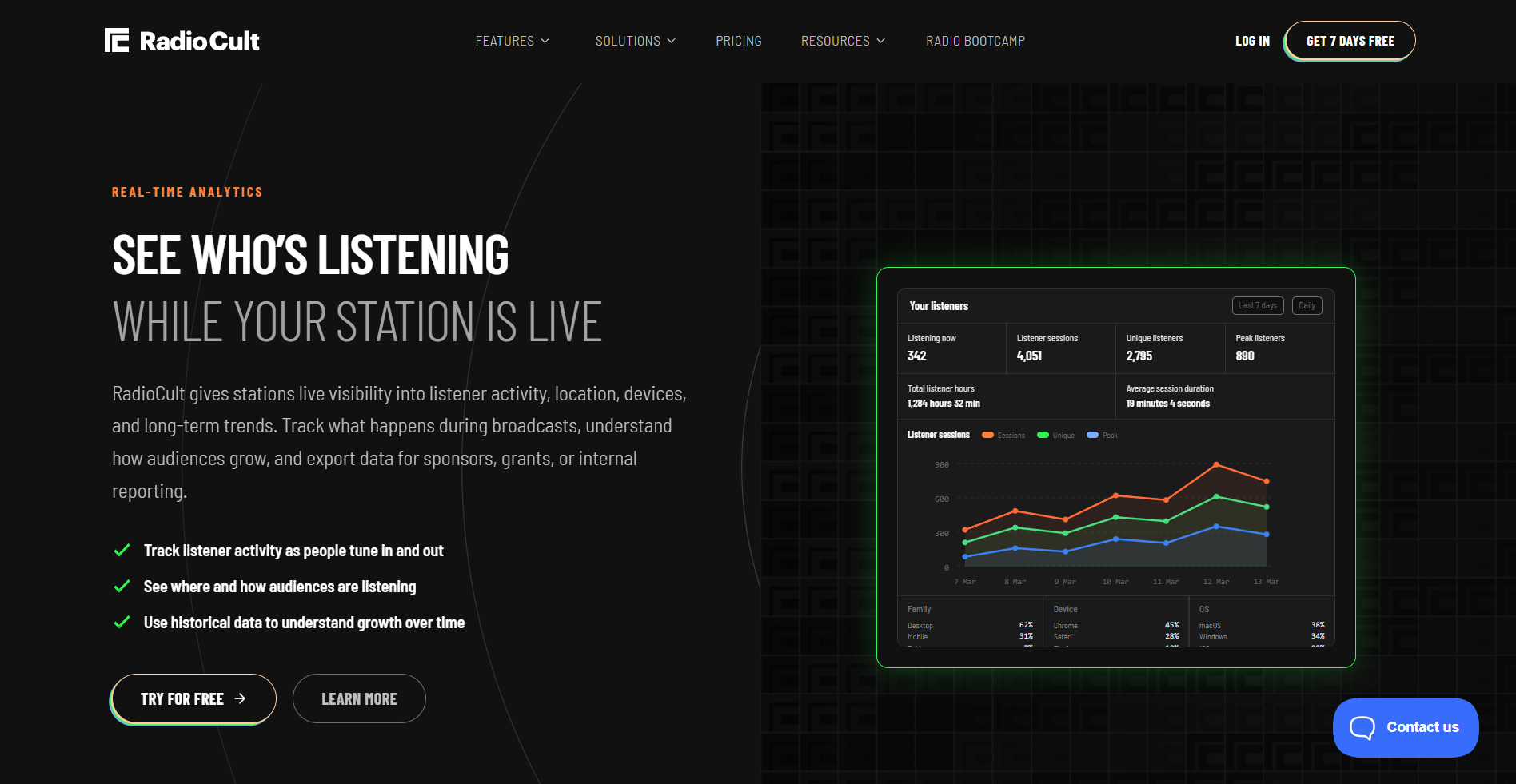
Fees are calculated on listening, not on the number of songs in a library. Most licensing bodies charge the greater of a percentage of station revenue or a usage-based fee, and most set a minimum annual fee, including for small and noncommercial stations. Under US statutory licensing, one performance is one listener hearing one track, so a station averaging 50 concurrent listeners and playing 15 songs an hour generates 750 performances in that hour. Fees therefore grow with the audience, and a station’s own listener data becomes part of its budgeting. RadioCult’s internet radio royalty calculator estimates recording and composition fees for stations in the United States, the United Kingdom, Canada, Ireland, France, and Germany, based on average listeners, hours broadcast, and station type.
Station status changes the rate. Commercial, noncommercial, and educational stations are treated differently, and the rates themselves are revised. In the United States, the recording rates for webcasters are set by the Copyright Royalty Judges for five-year periods, and the current proceeding covers 2026 through 2030. Stations should check the published rates for their category before setting a budget.
Some programming needs no music license at all. Stations playing only their own music, royalty-free tracks, or talk content are generally outside it. Buying a download, CD, or record does not change the position, because a purchase covers listening, not public performance. Standard live or scheduled streaming is a performance rather than a reproduction, so most stations do not need a mechanical license, but offering downloads or producing podcasts that use commercial music usually requires separate clearances.
Online listeners can be anywhere, and most national licenses take that into account. A license obtained in the station’s home country typically covers listeners tuning in from abroad, but terms vary, and the license should state which territories it covers.
“Licensing is the part of starting a station that people most often put off,” said a RadioCult spokesperson. “Knowing which rights exist, and keeping a clean record of what aired, makes it manageable for a station of any size.”
Records are the other half of compliance. Licensing bodies use playout records to calculate and distribute royalties, and in the United States, statutory licensees submit reports of use to SoundExchange alongside their payments. Manual track lists are hardest to keep for pre-recorded shows and continuous mixes, where track details are often missing. RadioCult’s scheduling and reports help stations maintain playout logs, and its optional 24/7 Music Recognition add-on identifies and timestamps each track on the stream for royalty reporting, across live and pre-recorded shows.
RadioCult does not provide licensing services, and its licensing guide is informational rather than legal advice. Requirements vary by country and change over time, and stations should confirm their position with the relevant licensing bodies or a copyright adviser before broadcasting.
RadioCult plans start at $33 per month, and every plan includes a seven-day free trial.
About RadioCult
RadioCult is an online radio hosting platform built for independent and community stations that broadcast 24/7 with multiple presenters. It combines live and automated broadcasting, radio-native scheduling, station and artist management, and unlimited concurrent listeners in one platform, with human support and pricing that starts at $33 per month. Learn more at https://www.radiocult.fm.
Corey Haines
Conversion Factory
Visit us on social media:
Instagram
Facebook
X
Legal Disclaimer:
EIN Presswire provides this news content “as is” without warranty of any kind. We do not accept any responsibility or liability
for the accuracy, content, images, videos, licenses, completeness, legality, or reliability of the information contained in this
article. If you have any complaints or copyright issues related to this article, kindly contact the author above.

Media gallery
