Vadzo Imaging Launches Armor-821CRS: Onsemi AR0821 8MP HDR GMSL2 Camera for High Resolution Embedded Vision
The Armor-821CRS is an Onsemi AR0821 8MP HDR GMSL2 Camera, and Vadzo Imaging is launching it for high-resolution
Press Release Disclaimer: This is a press release distributed through the XPR Media network. It has not been independently verified by our newsroom.

The Armor-821CRS is an Onsemi AR0821 8MP HDR GMSL2 Camera, and Vadzo Imaging is launching it for high-resolution embedded vision. Vehicles, robots, and large machines often need a camera that sits far from the computer that reads it, in an environment full of electrical noise, vibration, and heat. A flat MIPI cable reaches only a short distance, and USB and Ethernet add cost and latency. GMSL2 is a serializer and deserializer link that carries high-speed video and control over a single coaxial or twisted pair cable, and the Armor-821CRS uses it to stream 4K video at 30 frames per second over a cable up to 15 meters long. HDR keeps bright and dark regions readable, and an on-board ISP applies auto exposure and auto white balance. As a 4K HDR GMSL2 Camera, an 8MP GMSL2 Camera Module, and an Embedded Vision GMSL2 Camera, it integrates several units with NVIDIA Jetson Orin NX and AGX Orin, supplying clean frames to the computer.
FORT WORTH, TX / ACCESS Newswire / October 29, 2026 / Vadzo Imaging, a provider of embedded vision camera products for OEMs and system integrators, today launches the Armor-821CRS, an 8MP HDR GMSL2 Camera built on the Onsemi AR0821 sensor. Part of Vadzo’s SerDes camera portfolio, the Armor-821CRS combines HDR, an on-board ISP, auto exposure, auto white balance, and a GMSL2 interface that carries 4K video at 30 frames per second over a cable up to 15 meters long. With this launch, Vadzo presents an AR0821 HDR GMSL2 Camera for telematics, security, and robotics systems, together with guidance on cable reach, link bandwidth, and multi-camera integration with NVIDIA Jetson Orin NX and AGX Orin.
Why an 8MP HDR GMSL2 Camera Suits Long-Cable Vehicle and Machine Systems
A camera is only useful when its pictures reach the computer intact. In a vehicle, a robot, or a large machine, the camera often sits at the far end of the structure, at a bumper, a mast, a gripper, or a roof, while the computer sits in a protected enclosure. The wiring between them must survive vibration, temperature swings, and electrical noise from motors, inverters, and radios. The flat cables that carry MIPI CSI-2 signals suit distances of a few centimeters to a few tens of centimeters. Beyond that, the signal degrades, and the design needs another link. Designers then face a choice between a short, fragile connection and a link built for distance.
USB and Ethernet reach farther, but each has costs. A USB camera needs a controller and cable that are not designed for automotive noise, and its practical reach is a few meters. An Ethernet camera needs a network stack, a switch or an extra port, and compression or a large bandwidth budget, which adds delay. Neither is a natural fit for a design that wants several high-resolution camera units feeding one processor with low and predictable latency. A link that carries video and control together also simplifies the wiring harness.
Light is the second problem. Vehicles move from bright sun to tunnels and garages, and machines work under bright lamps and dark corners. A standard exposure clips one end of the scene or loses the other, and software that reads the picture, whether a driver assistance function or a robot, needs both. The camera also has to apply auto exposure and white balance quickly, since the scene changes as the platform moves. A slow response costs the first frames after every change in light.
Integration closes the list. A platform with four or six camera units needs a way to connect them to a few processor ports, to power them without a thicket of wires, and to keep their timing manageable. Teams that choose a camera interface without these needs in mind often find, after the first prototype, that the cable is the weakest part of the system. Choosing the link early, with the connector and the distance in mind, avoids that discovery.
How an 8MP HDR GMSL2 Camera Transmits 4K Video over 15 Meters
The Armor-821CRS is built on the Onsemi AR0821, an 8MP (3848 x 2168) color rolling shutter sensor with 2.1 micron pixels and an advanced HDR capability. The camera adds an on-board ISP, which finishes the image inside the module, and a GMSL2 serializer, which converts the camera’s MIPI CSI-2 output into a high-speed serial stream. A matching deserializer on the host side turns the stream back into MIPI CSI-2 for the processor. Because the camera sends a finished image, the host does not need to build an ISP profile for the sensor. That saves weeks of tuning and keeps color the same on every platform.
GMSL2, the second generation of the Gigabit Multimedia Serial Link, carries video on a forward channel with a nominal rate of up to 6 gigabits per second, and it carries control and configuration on a reverse channel of far lower speed. It runs over coaxial cable or shielded twisted pair, and it is designed for the electrical noise of automotive and industrial environments. A short calculation shows how much of the link 4K video uses. If the camera sends 8-bit YUV422 at two bytes per pixel, a 3848 x 2168 frame is about 16.6 megabytes, and 30 frames per second needs about 498 megabytes per second, or about 4 gigabits per second. That is roughly two-thirds of the nominal forward rate. The output format and the usable rate after overhead should be confirmed against the product documentation, and the example is illustrative. A raw output format would use less of the link, and a different color format would use more.
The on-board ISP applies auto exposure and auto white balance so the host receives balanced images from the first frame. HDR extends the range of brightness the sensor records, so a tunnel exit or a bright window does not wash out the scene. Because the sensor reads the image row by row, the camera uses a rolling shutter, which suits most scenes and can show skew on very fast motion or strong vibration, so teams with such motion should test the camera on their platform. The deserializer can accept more than one link, so a single NVIDIA Jetson Orin NX or AGX Orin can read several camera units, and the number depends on the deserializer board chosen. Teams should also check that the combined data rate fits the processor’s camera inputs.
Cable reach is the practical benefit. The module streams 4K at 30 frames per second over a cable up to 15 meters long, which covers most vehicles and many machines. A single coaxial cable can carry the video and the control channel, and often power as well, which reduces the number of wires to route and protect. Teams should confirm the connector, the cable specification, and any power over coax arrangement against the product documentation, and they should test the full cable run with the real connectors and the real noise environment. A run that passes on the bench can behave differently next to a motor or an inverter.
Latency, timing, and robustness complete the engineering picture. A serializer and deserializer pair adds only a small, fixed delay, far less than a compressed network stream, which matters when software reacts to what the camera sees. The delay is also predictable, so the processor can line up frames from several modules without guessing. The link is built for noisy surroundings, with signaling and error handling designed for vehicles, and the coaxial cable shields the signal from interference that would corrupt a long flat cable. Control traffic travels on the reverse channel, so the host can configure each camera without a separate bus, and the number of conductors to route through a door seal, a hinge, or a cable chain falls to one. None of this removes the need for testing. The cable, the connectors, the grounding, and the power arrangement all affect the result, and Vadzo encourages teams to prototype the real harness early, because the cable is where a long link either proves itself or fails.
Product Overview
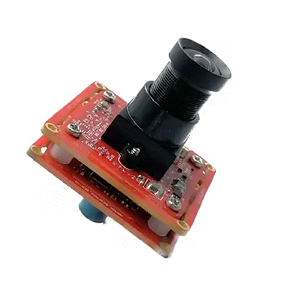
The Armor-821CRS is an 8MP color GMSL2 module built on the Onsemi AR0821 sensor and launched for high-resolution embedded vision. As an 8MP Rolling Shutter GMSL2 Camera, it offers 4K resolution at reasonable cost for scenes without extreme motion, and as an 8MP On-board ISP GMSL2 Camera, it finishes the image inside the module. The 8MP Auto Exposure GMSL2 Camera designation covers its automatic exposure control, and the 8MP AWB GMSL2 Camera designation covers automatic white balance. The module combines the sensor, an on-board ISP, and a GMSL2 serializer. It also serves as an AR0821 GMSL2 Camera, an AR0821 Rolling Shutter HDR Camera, an AR0821 On-board ISP Camera, an 8MP AE AWB GMSL2 Camera, and an 8MP GMSL2 Coax Camera for designs that need a long, robust link.
Key specs: 8MP 4K (3848 x 2168) Max Resolution | Onsemi AR0821 Sensor | 2.1 micron Pixel | Color with Rolling Shutter | GMSL2 SerDes Interface, 4K at 30 Frames per Second over 15 Meters | S-Mount (M12) Optics
Key Capabilities of the 8MP HDR GMSL2 Camera
HDR Imaging for High-Contrast Vehicle and Machine Scenes
Vehicles and machines move between bright and dark conditions, such as a sunlit road and a tunnel, or a lit work cell and a shadowed corner. The sensor’s HDR capability records a wider range of brightness in one frame, so detail stays readable at both ends. A 4K HDR GMSL2 Camera of this kind gives driver assistance and robot software a usable picture where a standard exposure would clip highlights or lose shadows. Teams should record real scenes with HDR on and off to confirm the benefit. Routes with tunnels, low sun, and garages show the difference most clearly. Teams should also check that moving subjects do not show artifacts in the mode they choose, since HDR methods differ in how they handle motion.
8MP Rolling Shutter Imaging for Embedded Vision
The sensor reads the image row by row, which gives high resolution and good sensitivity at reasonable cost. For most scenes, the effect is invisible. Strong vibration or very fast motion across the frame can show skew, and a short exposure reduces it. Vadzo offers global shutter modules in its portfolio for platforms where fast motion is the main concern, and teams can compare the two on their own footage. Many vehicles and machines do not need that, and the rolling shutter serves them well.
Onboard ISP for In-Camera Image Processing
The on-board image signal processor finishes the picture inside the module, so the host receives a processed frame and does not build an ISP profile for the sensor. An AR0821 On-board ISP Camera of this kind gives the same color on every unit, which helps a fleet of vehicles or machines look consistent. Teams that need raw data and custom tuning should discuss a raw sensor module with Vadzo instead. For most platforms, a finished image from the first day shortens development.
Automatic Exposure and White Balance for Changing Light
Scenes change as a platform moves, and the camera must adapt quickly. Auto exposure keeps brightness suitable, and auto white balance keeps whites neutral under sunlight, LED, and mixed lighting. An AR0821 AE GMSL2 Camera and an AR0821 AWB HDR Camera apply both inside the ISP, and an 8MP AE AWB GMSL2 Camera therefore delivers balanced frames from the first image. Manual control remains available for teams that prefer fixed values. Starting with the automatic settings is usually the fastest route to a working prototype.
SerDes Architecture for Remote Camera Integration
A serializer on the camera converts the MIPI CSI-2 output into a high-speed serial stream, and a deserializer on the host converts it back. This keeps the sensitive MIPI signals to a few centimeters at each end and lets a robust serial link span the distance between them. The architecture also lets a deserializer accept several camera units, which reduces the number of ports the processor needs. It also means the processor sees the same MIPI interface regardless of the cable length. It also keeps heat and weight at the camera end low, since the camera board carries only the sensor, the ISP, and the serializer.
GMSL2 Interface for Long-Distance Video Transmission
GMSL2 carries video on a forward channel with a nominal rate of up to 6 gigabits per second and control on a slower reverse channel, over coaxial cable or shielded twisted pair, and it is designed for automotive and industrial noise. As an 8MP GMSL2 Camera Module, the Armor-821CRS uses it to keep the camera far from the computer without a loss of picture quality. Teams should confirm the connector and cable type, and test the real cable run. Strain relief at the connector prevents most field problems, and a vibration test with the connectors fitted is worth doing early, since a loose connector is a common cause of intermittent faults on long links.
4K Video at 30 FPS over a 15-Meter Cable
The module streams 4K video at 30 frames per second over a cable up to 15 meters long, which covers most vehicles and many machines. In the illustrative calculation, 8-bit YUV422 at that rate needs about 4 gigabits per second, which fits within the nominal forward rate of the link. Teams should confirm the output format and the usable rate against the product documentation and test the full cable run. A longer test on a vibrating platform gives the most reliable answer.
Multi-Camera Integration with NVIDIA Jetson Orin NX and AGX Orin
Platforms often need several camera units for surround or stereo views. The deserializer on the host side can accept more than one GMSL2 link, so a single NVIDIA Jetson Orin NX or AGX Orin can read several modules. The number of camera units depends on the deserializer board and the processor, and the total bandwidth must fit within the processor’s camera inputs. As an 8MP HDR GMSL2 Camera Manufacturer, Vadzo supports deserializer selection, cable planning, firmware customization, and enclosure design for volume programs. Teams moving from a bench test to a pilot keep the same module and documentation, and the same cable assembly can often carry over into the first production harness.
“Customers building vehicles and robots told us the same thing. The camera has to sit where the view is, the computer has to sit where it is protected, and the cable between them has to work. GMSL2 does that, and the Armor-821CRS pairs it with an 8MP HDR sensor and an on-board ISP, so 4K video reaches the computer over a 15-meter cable with exposure and white balance already handled. We are straightforward about the details that matter. The bandwidth depends on the output format, the number of camera units depends on the deserializer, and every cable run should be tested with the real connectors. We help customers plan all three, and we encourage them to test the whole chain, from the camera to the deserializer to the processor, before they fix the design.” – Alwin Vincent, Product Manager, Vadzo Imaging.
Applications of the Armor-821CRS 8MP HDR GMSL2 Camera
Vehicle and Fleet Monitoring with HDR Imaging over Long Cable Runs
Vehicles need camera units at the windshield, the corners, and the cargo area, all connected to one computer. The Armor-821CRS works as an Automotive GMSL2 Camera whose HDR mode handles tunnels and glare, and as a dashcam GMSL2 Camera for recording from the cabin. It also serves fleet operators as a fleet management GMSL2 Camera that feeds one telematics computer over a robust link. Teams should confirm the temperature range and vibration limits for their vehicles. Dashcam-style recording also needs a plan for storage and retention, which belongs to the fleet system. Teams should also check that the cable run through the cabin and the doors survives repeated opening, since harness fatigue is a common field problem.
High-Resolution Surveillance with Remote GMSL2 Camera Placement
Security systems often run camera units on long cable routes back to a central recorder. The module serves as a high-resolution GMSL2 Camera that keeps 4K detail over a 15-meter run on a single coaxial cable, with HDR for scenes that mix bright entrances and dark interiors. Installers should plan the connector, the cable, and the deserializer location early, and they should keep coaxial runs away from heavy power cables where possible, since a long run is only as clean as its surroundings.
Robotics and Machine Vision with Remote 4K Camera Integration
Robots, vehicles, and large machines place camera units on moving parts and mount the computer elsewhere. The camera functions as a Robotics GMSL2 Camera on mobile platforms, as a Machine Vision GMSL2 Camera for inspection stations with long cable runs, and as an aerial vehicle GMSL2 Camera on larger aircraft that can carry a deserializer board. The same module can also work as a document scanning GMSL2 Camera in handling systems that need high resolution at a distance from the processor. Fast-moving lines or strong vibration may call for a global shutter camera, which Vadzo offers in its portfolio.
Frequently Asked Questions
Q: What does GMSL2 do that a MIPI cable cannot?
A: Vadzo Imaging explains that a flat MIPI cable carries video only a short distance, usually a few centimeters to a few tens of centimeters, before the signal degrades. GMSL2 converts the video into a high-speed serial stream that travels over coaxial cable or shielded twisted pair for many meters, and it carries control signals on a reverse channel. It is also designed for the electrical noise of vehicles and machines, so a high-resolution camera can sit far from its computer.
Q: How much of a GMSL2 link does 4K video at 30 frames per second use?
A: It depends on the format. In 8-bit YUV422, a 4K frame is about 16.6 megabytes, so 30 frames per second needs about 498 megabytes per second, or about 4 gigabits per second, which is roughly two-thirds of the nominal 6 gigabit forward rate of GMSL2. A raw format would use less. Vadzo Imaging recommends confirming the output format and the usable rate for the chosen camera, and testing the full cable run, since cable quality and connectors affect the margin.
Q: How many camera units can one NVIDIA Jetson read over GMSL2?
A: It depends on the deserializer board and the processor. A deserializer can accept several GMSL2 links and present them to the Jetson through its camera inputs, so a single Orin NX or AGX Orin can read several camera units. The total bandwidth must fit within the processor’s camera inputs. Vadzo Imaging helps teams choose a deserializer board and plan the number of camera units for their platform, and a short test with the real number of units confirms that the bandwidth fits. An Automotive GMSL2 Camera setup with four units is a common starting point, and a Machine Vision GMSL2 Camera cell may need only one, so the right number depends on the application and the processor.
Q: What does HDR do for a vehicle camera?
A: HDR records a wider range of brightness in one frame, so a bright sky and a dark road can both stay readable. Vehicles move from sunlight into tunnels and garages, and a standard exposure would clip the highlights or lose the shadows. A 4K HDR GMSL2 Camera keeps detail at both ends, and Vadzo Imaging recommends recording real routes with HDR on and off to confirm the benefit for the application, and an 8MP GMSL2 Camera Module with an on-board ISP applies exposure and white balance quickly as the light changes.
Q: Why should integrators choose Vadzo Imaging as their 8MP HDR GMSL2 Camera Manufacturer?
A: Vadzo Imaging offers more than a camera module built around a capable sensor. Integrators working with Vadzo Imaging receive a module with HDR, an on-board ISP, and a GMSL2 interface that carries 4K video over a 15-meter cable, along with candid guidance on bandwidth, deserializer choice, and cable testing, plus engineering support for lens selection, firmware customization, and enclosure design. Vadzo Imaging maintains evaluation kits with no minimum order requirement, so teams can test on their own platform before committing to volume production.
Availability
The Armor-821CRS 8MP HDR GMSL2 Camera built on the Onsemi AR0821 sensor is available now for evaluation and production orders. Evaluation kits include the camera module, a lens, a cable, and platform documentation, with no minimum order requirement, so a team can run the module on a vehicle or a machine and judge the link in real conditions. Integration teams can test the full 15-meter cable run in their own noise environment, confirm several camera units on their own NVIDIA Jetson Orin NX or AGX Orin setup, and check HDR on their own routes before committing to a production bill of materials, which tells them more than a datasheet comparison alone. Teams that need a different lens, cable, or deserializer configuration can ask Vadzo to review the setup. Browse the full range of camera options at Vadzo’s website or discuss OEM integration requirements.
About Vadzo Imaging
Vadzo Imaging is a global provider of embedded vision solutions and delivers high-performance camera technologies and imaging platforms for applications in robotics, industrial automation, UAVs, edge AI, and medical systems. Its products are designed for seamless integration with leading embedded platforms including NVIDIA Jetson, Rockchip, Raspberry Pi, and NXP i.MX. Vadzo supports customers through hardware customization, firmware development, and module-level drivers, enabling faster development and deployment of vision based systems across MIPI, USB, GigE, Wi-Fi, GMSL2, and SerDes camera interfaces.
Media Contact
Alwin Vincent
Vadzo Imaging
Email: alwin@vadzoimaging.com
LinkedIn: Vadzo Imaging
YouTube: Vadzo Imaging
X: Vadzo Imaging
SOURCE: Vadzo Imaging
View the original press release on ACCESS Newswire
Media gallery